Introduction
Most businesses today understand the importance of backups. They have systems in place that replicate data, store copies off-site, or maintain cloud backups in case something goes wrong.
And that is a good start.
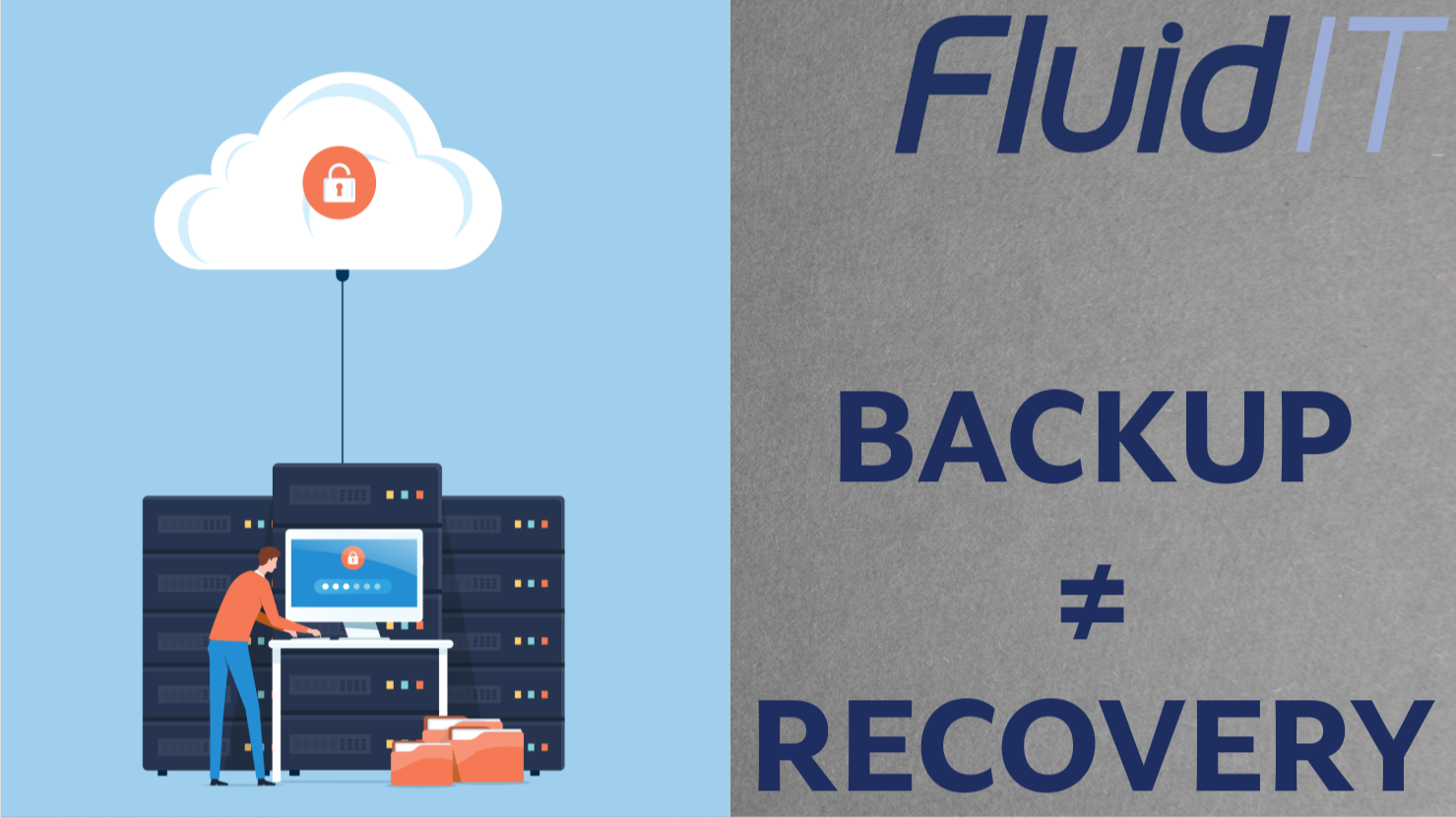
But there is a critical difference between having backups and being able to recover from an incident quickly and effectively. That gap—between backup and recovery—is where many businesses discover their real risk.
Backups Are Only Half the Equation
Backups answer one question:
“Do we have a copy of the data?”
Recovery answers a much harder one:
“Can we restore operations within an acceptable timeframe?”
Those are not the same.
In a real-world scenario—whether it's ransomware, hardware failure, or accidental deletion—the speed and reliability of recovery determine the actual business impact.
The Reality of Downtime
When systems go down, the cost is rarely limited to IT.
It becomes:
- Lost productivity across teams
- Missed client deadlines
- Disrupted operations
- Increased internal strain
- Potential reputational damage
If recovery takes hours longer than expected—or days instead of hours—the problem escalates quickly.
Many organizations assume recovery will be straightforward because backups exist. That assumption is often untested.
Why Recovery Fails in Practice
There are several common reasons recovery efforts fall short:
- Backups are incomplete
Critical systems or configurations may not be included.
- Recovery speed is slower than expected
Large data sets can take significant time to restore.
- Dependencies are not documented
Systems rely on other systems to function properly.
- No defined recovery order
Teams don’t know which systems to prioritize.
- Lack of testing
Backups are never actually restored until there is a crisis.
In many cases, these are not technical failures—they are planning failures.
What a Real Recovery Strategy Looks Like
A strong recovery strategy is built around clarity and testing:
- Defined Recovery Time Objectives (RTO)
How quickly must systems be restored?
- Defined Recovery Point Objectives (RPO)
How much data loss is acceptable?
- Documented recovery procedures
Step-by-step restoration plans
- System prioritization
Which systems come back first?
- Regular testing
Validating that restoration works as expected
Recovery should not be theoretical—it should be proven.
Conclusion
Backups create the possibility of recovery. Planning and testing determine whether that recovery actually happens.
The organizations that invest in recovery—not just backup—are the ones that can withstand disruptions without turning them into business crises.
 Stephen Casey

 Devin Kindred : Dec 23, 2025, 5:00:00 AM

 Clint Underwood